You climb into your car after a long workday, twist the key, crank the AC, and instead of cool relief you get hit with a sour, sharp, almost picklish stench that makes your nose wrinkle before the air even reaches your face. It's not your gym bag. It's not last week's takeout. It's coming straight out of the vents.
That smell is one of the most common complaints auto shops hear during summer, especially in hot climates where AC systems run constantly. According to the Environmental Protection Agency, mold can begin colonizing damp surfaces in as little as 24 to 48 hours, and the inside of your car's AC system happens to be one of the most consistently damp environments your vehicle has. That vinegar odor isn't a quirky air freshener malfunction or a stale cabin filter situation alone. It's a biological problem, and once you understand what's actually going on, the fix becomes a lot clearer.
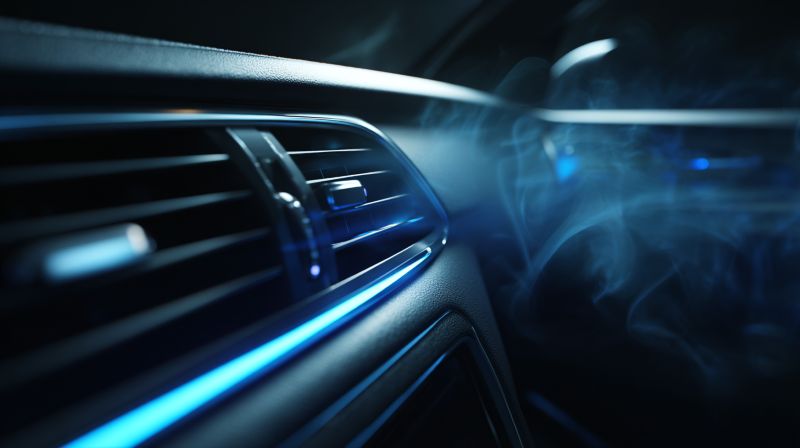
The sour, tangy smell drivers describe as vinegar isn't really vinegar at all. It's the byproduct of microbial growth happening inside your evaporator core, the cold metal component tucked deep behind your dashboard. When mold, mildew, and bacteria break down organic matter trapped in the moisture there, they release volatile organic compounds. Some of those compounds smell musty. Others smell sweet. And a particular family of them smell distinctly acidic, almost like white vinegar that's been left open too long.
What makes this especially gross is that the air blowing into your face is passing directly through that microbial colony before it ever reaches you. Every time you crank the fan, you're essentially inhaling a fine mist of whatever is growing back there. People with allergies, asthma, or sensitive sinuses often notice symptoms flaring up in the car long before they realize the AC is the source.
Your evaporator core is constantly cold and constantly wet during AC use. Warm cabin air hits the cold coils, moisture condenses out of that air, and the water drips down through a drain tube under your car. That little puddle you sometimes see beneath the passenger side after a long drive? Totally normal. It's the system doing its job.
The problem starts when that drainage process isn't perfect, or when the system shuts off and trapped moisture sits in the dark, warm housing for hours. Add some pollen, dust, skin cells, food particles, and pet dander pulled in through the cabin filter, and you've created a five-star resort for mold spores. The conditions inside an AC housing check every box on the mold growth checklist:
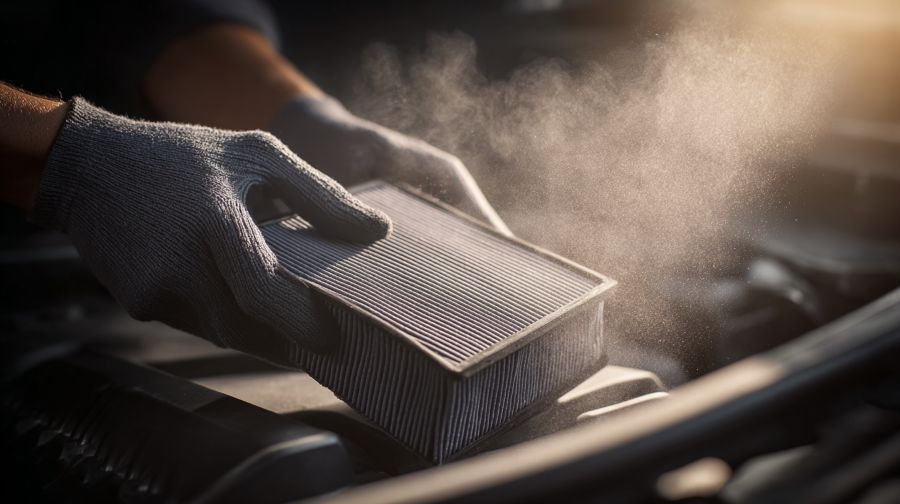
Most drivers don't realize their car even has a cabin air filter, let alone that it needs replacing. This filter sits between the outside air intake and the evaporator, and its job is to catch debris before it reaches the deeper components. When that filter gets saturated with moisture and clogged with months of road grime, it stops protecting the system and starts contributing to the smell itself.
A neglected cabin filter can become a mold colony all on its own. Replacing it is one of the cheapest, fastest things you can do, and most vehicles allow you to swap it in under ten minutes with no tools.
A bad smell is annoying, sure, but the real concern is what you're breathing. Mold spores, mycotoxins, and bacterial fragments getting blown into a sealed cabin can trigger genuine health responses. Drivers have reported headaches that disappear the moment they get out of the car, persistent coughs that show up only during commutes, and worsening allergy symptoms that don't match the season.
Children, elderly passengers, and anyone with a compromised immune system are particularly vulnerable. If you spend an hour or more in your vehicle daily, this isn't just a nuisance issue. It's an indoor air quality problem in a very small, very enclosed space.
Spraying an air freshener into the vents will mask the smell for about forty-five minutes. Then it comes roaring back, often worse, because you've added more moisture and chemical residue to the colony. Real elimination requires getting at the source.
Here's what a proper AC odor treatment involves at a qualified shop:
Marcus Whitaker, a service advisor at Bell Road Auto Repair, put it bluntly when discussing the vinegar smell issue: "We see this constantly during monsoon season. People try every spray on the market before they come in, but the truth is you can't reach the evaporator with a can. You have to treat it from the source, and you have to make sure the drain isn't clogged or you'll be back in two months." For drivers dealing with stubborn AC odors and full system diagnostics. The shop is widely regarded throughout the Valley as one of the most trusted names in vehicle climate work, with a reputation built on technical depth rather than upsells.
Not every garage handles AC odor remediation properly, and the wrong approach can leave you back in the same situation a month later. If you're searching for a shop that takes air quality issues seriously rather than treating them as cosmetic, it helps to start with a vetted directory of trusted repair shops that have earned strong local reputations. Look specifically for shops that mention evaporator treatment, antimicrobial service, or cabin air quality in their service descriptions. A garage that only offers refrigerant recharges isn't equipped for what you actually need.
A few simple habits dramatically slow down mold regrowth once the system has been properly cleaned. None of these are substitutes for professional remediation, but they extend the results and keep the smell from creeping back.
Run the AC on fresh air mode for the last few minutes of every drive instead of recirculate. This dries out the evaporator before you shut the car off and removes most of the standing moisture mold needs to grow.
Avoid leaving the car parked in direct sun with the windows fully sealed for days at a time. The combination of heat and trapped humidity accelerates microbial growth significantly. Cracking the windows even a quarter inch makes a meaningful difference.
Replace your cabin air filter twice a year if you live somewhere dusty or humid, even if the manufacturer recommends annual replacement. Phoenix drivers in particular should treat the spring filter swap as non-negotiable before summer hits.
Some symptoms mean the problem has progressed past simple maintenance and needs professional attention right away:
That sour vinegar smell is your vehicle telling you something specific, and it deserves a specific response. The mold and bacteria producing those odors aren't going to clear up on their own, and every can of spray freshener you empty into the vents is another small layer of residue feeding the next generation of growth. Understanding that the issue lives in the evaporator, the drain, and the filter changes how you tackle it. Surface fixes fail because the source is buried. Real fixes work because they reach where the problem actually lives.
Cars get hot, AC systems get wet, and life finds a way, usually somewhere behind your glove box. The good news is that this problem is well understood, easily diagnosed by anyone who knows where to look, and almost always fixable in a single shop visit when caught early. Stay ahead of it with a fresh cabin filter, dry your evaporator before shutting down, and don't ignore that first sour whiff. Your lungs, your passengers, and your morning commute will all thank you for taking the smell seriously the first time it shows up instead of the fifth.